
Dolly West's Kitchen
by Frank McGuiness
Directed by Zizi Sulkin
October 14th - 31st, 2003
The Tower Theatre performing at Theatro Technis, Camden





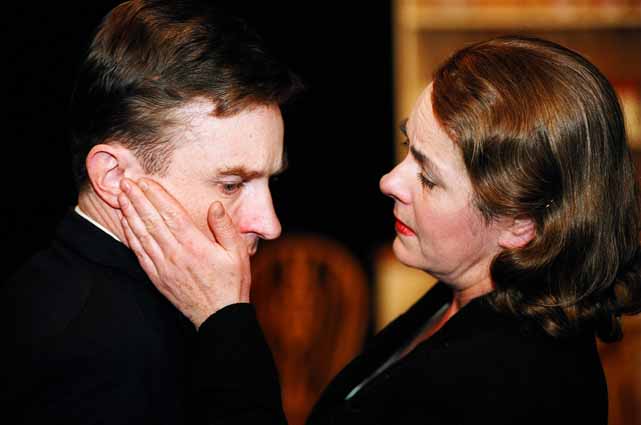
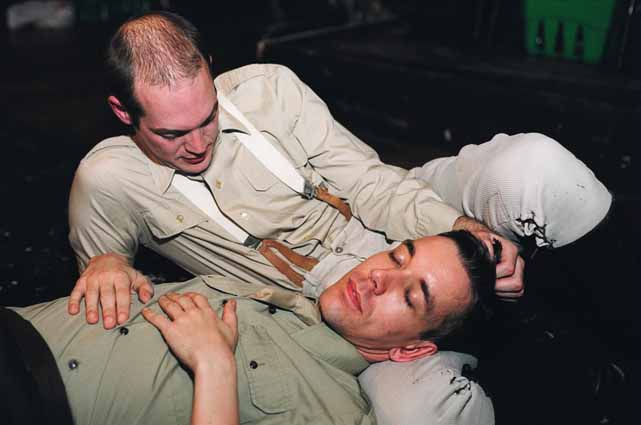
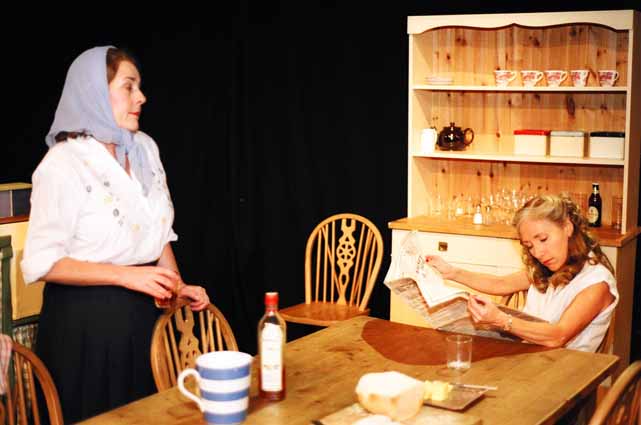

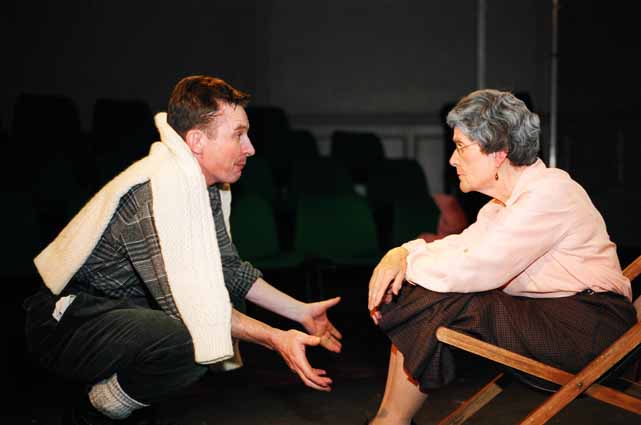
Cast List
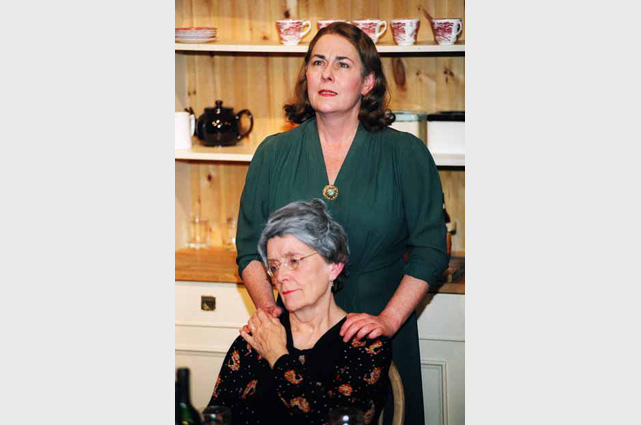
Dolly West : Colette Dockery
Esther Horgan : Jill Fear
Justin West : Craig Carruthers
Rima West : Celia Reynolds
Ned Horgan : Tom Rainbird
Alec Redding : Keith Hill
Anna Owens : Orla Falls
Marco Delavicario : Steven Templeman
Jamie O'Brien : Philip O'Gorman
Production Team
Director : Zizi Sulkin
Lighting Design : Robert Irvine
Set Realisation : Dorothy Wright
Sound Design : Phillip Ley
Costume Design : Jill Batty
Stage Managers : Ann Watchorn, Claire Christy
ASMs : Tom Tillery, Lyndsey Ruigrok, Denyse MacPherson, David Norman Hedges
Lighting operators : Phillip Ley, Jane Pallant
Sound operators : Peta Barker, Jacqui de Prez
Wardrobe : Jill Batty, Ann Gelbman, Sue Lacey
Set Construction : Dorothy Wright, Keith Syrett, Keith Hill, Steven Templeman, Celia Reynolds, Zizi Sulkin
In-house review by Richard Dunn
Before retirement, Richard was commissioner for drama and arts programmes at the BBC. He is a Friend of the Tower.
Dolly West's Kitchen is Frank McGuinness's variation on a theme by Chekhov. In 1990, McGuinness produced a
translation of Three Sisters for the Royal Court, and here he transposes many of the elements of the play from Russia to Donegal, but
broadens the humour to make something very Irish and very much his own.
Dolly West has returned home from Mussolini's Italy to Buncrana, County Donegal, just over the border from Derry. She shares the house with
her mother Rima, married sister Esther and husband Ned and with her younger brother Justin, a fiercely nationalistic junior officer in the
Irish Army. The year is 1943, and Ireland is maintaining its neutrality in the war against Hitler.
Into the already tense lives of this family come three very different men - all soldiers stationed just over the border in Northern Ireland.
Alec is an English officer and former lover of Dolly. Marco and Jamie are American soldiers waiting to see action in Europe. The former is
handsome and heterosexual, the other an outrageous queen. By the end of the play, everyone's life has been changed irreversibly. McGuinness's
central theme seems to be that people and countries cannot be neutral; commitment is what makes life dangerous and painful, but also,
ultimately, worth living.
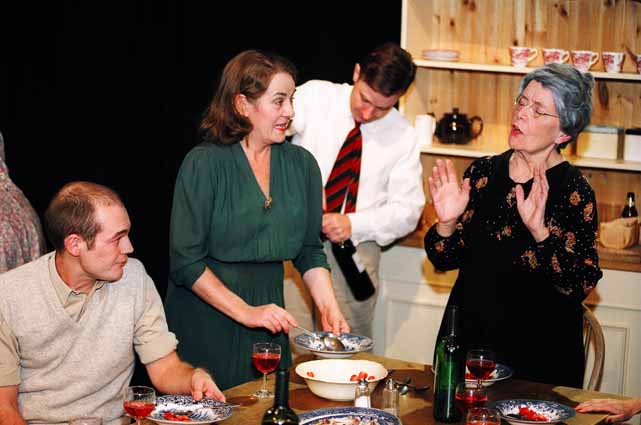
It was an excellent choice for the Tower, particularly at this time of homelessness. It requires a single, simple set - neatly
provided by Dorothy Wright - and provides nine meaty roles and some hilarious lines. Most of these are given to Rima West, and Celia Reynolds
clearly revelled in the opportunities. Much of the humour comes from the shock of hearing salty language in the mouth of a matriarch, and
Celia Reynolds' astute sense of timing and twinkling delivery ensured that every punch line hit its target. But Rima also represents
the voice of common sense at the centre of the play, and her humanity is as important as her irreverence, and here again Celia Reynolds
won the audience's hearts as she first kicked, tricked and then subtly manoeuvred her children into finding their destinies.
Of course the eponymous Dolly West is an equally central figure, and here again we saw a winning performance by Colette Dockery as one of
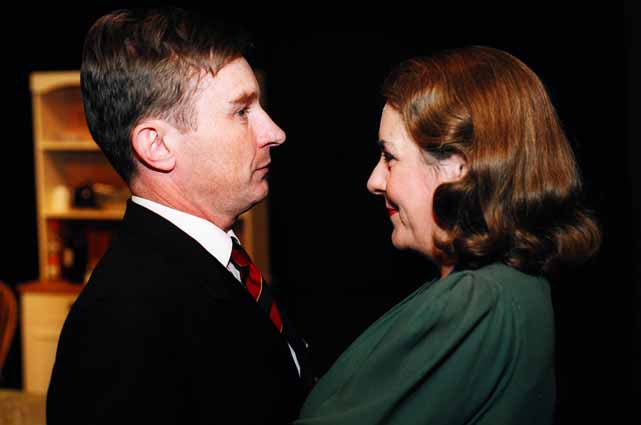
those strong, practical Irish women familiar to us from the plays of Synge and O'Casey. As her lover, Alec Redding, Keith Hill was perhaps
a little too business-like and buttoned up in the early scenes to suggest the rugged bisexual adventurer he is supposed to be (and would
this highly idiosyncratic character really have worn such conventional blazer and flannels, even in 1943?). However, he carried off with
great dignity, emotion and sincerity the final scene, in which Alec describes his traumatising experiences in the war.
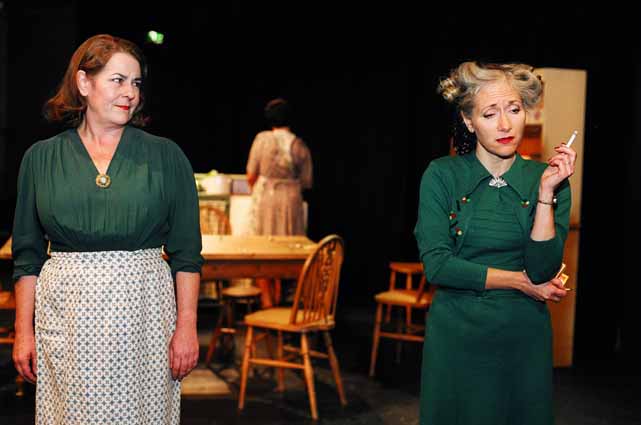
As Dolly's sister, Esther, Jill Fear brought a sense of anger and vulnerability. Esther has married Ned Horgan (Tom Rainbird), a
man she despises, yet she does not have the courage to follow her inclinations fully and leave him and follow the US serviceman Jamie O'Brien
(Philip O'Gorman) she has an affair with. The men in this triangle were nicely differentiated, Philip O'Gorman brought weight and presence to
his (rather under-written) role as the strong silent type, and Tom Rainbird's nobility and defencelessness made him a sympathetic Ned,
particularly when he realises he may not be the father of his beloved daughter. He was less convincing in the scene where he angrily
takes the maid Anna Owens (Orla Falls) to task, reminding her quite viciously that neither her mother nor father wanted her as a child.
The remaining couple in the play are the least likely and the least authentic - the fault, perhaps of the writing rather than the performances.
Dolly's brother Justin (a brooding performance from Craig Carruthers) is rabidly anti-English and pro-neutrality, yet virtually all of this
evaporates once he has met and fallen in love with the outrageously camp Marco Delavicario (Steven Templeman). "I am an American soldier.
I am not wearing lipstick! A little rouge, perhaps?" Frank McGuinness gives the character of Marco some very funny lines, but he also uses
him as the vehicle for some of the serious themes of the play "Don't lose your hatred", he tells Justin on more than one occasion, suggesting
that passion, not neutrality is the key to a fulfilled life. The problem for the actor is not to allow the easy camp jokes to undermine the
fundamental strength of the character, and Mr. Templeman didn't always get the balance right.
Indeed, in general, the only undermining weakness in Zizi Sulkin's otherwise hugely enjoyable and accomplished production was the balance
between the humorous and the emotional. All the jokes all came off extremely well, but not one of the loving embraces between characters -
homo- or hetero - was remotely believable; indeed, they were awkward. And I wish the actors had had the courage to sing! The ending of the
play was said to be heart breaking in the original production, as Dolly and the traumatised Alec stand together singing both verses of I
Vow to Thee My Country. Here it failed to bring a lump to the throat, largely, I feel, because Alec and Dolly spoke, rather than sang the
words.
Dolly West's Kitchen
by Frank McGuiness |
|
|
October 14th - 31st, 2003 |
The Tower Theatre performing at Theatro Technis, Camden |
|
Cast List
|
Production Team
|
In-house review by Richard Dunn
Before retirement, Richard was commissioner for drama and arts programmes at the BBC. He is a Friend of the Tower.
Dolly West's Kitchen is Frank McGuinness's variation on a theme by Chekhov. In 1990, McGuinness produced a
translation of Three Sisters for the Royal Court, and here he transposes many of the elements of the play from Russia to Donegal, but
broadens the humour to make something very Irish and very much his own.
Dolly West has returned home from Mussolini's Italy to Buncrana, County Donegal, just over the border from Derry. She shares the house with
her mother Rima, married sister Esther and husband Ned and with her younger brother Justin, a fiercely nationalistic junior officer in the
Irish Army. The year is 1943, and Ireland is maintaining its neutrality in the war against Hitler.
Into the already tense lives of this family come three very different men - all soldiers stationed just over the border in Northern Ireland.
Alec is an English officer and former lover of Dolly. Marco and Jamie are American soldiers waiting to see action in Europe. The former is
handsome and heterosexual, the other an outrageous queen. By the end of the play, everyone's life has been changed irreversibly. McGuinness's
central theme seems to be that people and countries cannot be neutral; commitment is what makes life dangerous and painful, but also,
ultimately, worth living.
It was an excellent choice for the Tower, particularly at this time of homelessness. It requires a single, simple set - neatly
provided by Dorothy Wright - and provides nine meaty roles and some hilarious lines. Most of these are given to Rima West, and Celia Reynolds
clearly revelled in the opportunities. Much of the humour comes from the shock of hearing salty language in the mouth of a matriarch, and
Celia Reynolds' astute sense of timing and twinkling delivery ensured that every punch line hit its target. But Rima also represents
the voice of common sense at the centre of the play, and her humanity is as important as her irreverence, and here again Celia Reynolds
won the audience's hearts as she first kicked, tricked and then subtly manoeuvred her children into finding their destinies.
Of course the eponymous Dolly West is an equally central figure, and here again we saw a winning performance by Colette Dockery as one of
those strong, practical Irish women familiar to us from the plays of Synge and O'Casey. As her lover, Alec Redding, Keith Hill was perhaps
a little too business-like and buttoned up in the early scenes to suggest the rugged bisexual adventurer he is supposed to be (and would
this highly idiosyncratic character really have worn such conventional blazer and flannels, even in 1943?). However, he carried off with
great dignity, emotion and sincerity the final scene, in which Alec describes his traumatising experiences in the war.
As Dolly's sister, Esther, Jill Fear brought a sense of anger and vulnerability. Esther has married Ned Horgan (Tom Rainbird), a
man she despises, yet she does not have the courage to follow her inclinations fully and leave him and follow the US serviceman Jamie O'Brien
(Philip O'Gorman) she has an affair with. The men in this triangle were nicely differentiated, Philip O'Gorman brought weight and presence to
his (rather under-written) role as the strong silent type, and Tom Rainbird's nobility and defencelessness made him a sympathetic Ned,
particularly when he realises he may not be the father of his beloved daughter. He was less convincing in the scene where he angrily
takes the maid Anna Owens (Orla Falls) to task, reminding her quite viciously that neither her mother nor father wanted her as a child.
The remaining couple in the play are the least likely and the least authentic - the fault, perhaps of the writing rather than the performances.
Dolly's brother Justin (a brooding performance from Craig Carruthers) is rabidly anti-English and pro-neutrality, yet virtually all of this
evaporates once he has met and fallen in love with the outrageously camp Marco Delavicario (Steven Templeman). "I am an American soldier.
I am not wearing lipstick! A little rouge, perhaps?" Frank McGuinness gives the character of Marco some very funny lines, but he also uses
him as the vehicle for some of the serious themes of the play "Don't lose your hatred", he tells Justin on more than one occasion, suggesting
that passion, not neutrality is the key to a fulfilled life. The problem for the actor is not to allow the easy camp jokes to undermine the
fundamental strength of the character, and Mr. Templeman didn't always get the balance right.
Indeed, in general, the only undermining weakness in Zizi Sulkin's otherwise hugely enjoyable and accomplished production was the balance
between the humorous and the emotional. All the jokes all came off extremely well, but not one of the loving embraces between characters -
homo- or hetero - was remotely believable; indeed, they were awkward. And I wish the actors had had the courage to sing! The ending of the
play was said to be heart breaking in the original production, as Dolly and the traumatised Alec stand together singing both verses of I
Vow to Thee My Country. Here it failed to bring a lump to the throat, largely, I feel, because Alec and Dolly spoke, rather than sang the
words.