


Fred and Madge
by Joe Orton
Directed by John McSpadyen
June 16th - 23rd, 2001
The Tower Theatre Company performing at the Tower Theatre, Canonbury
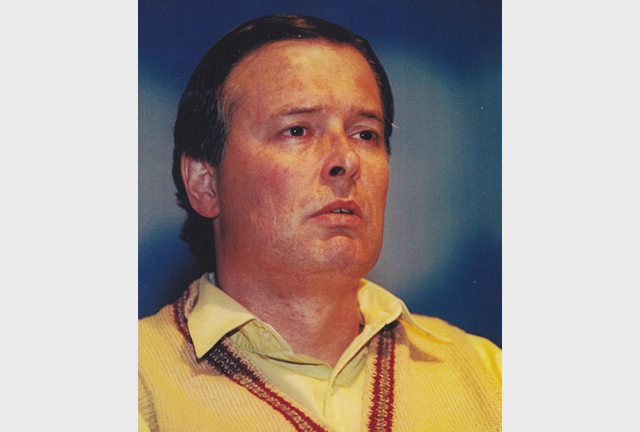
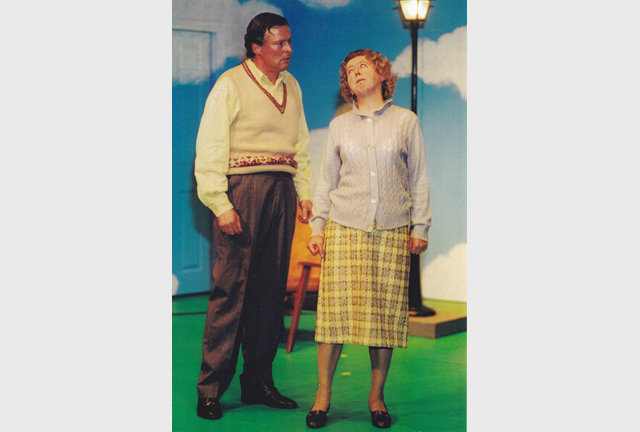
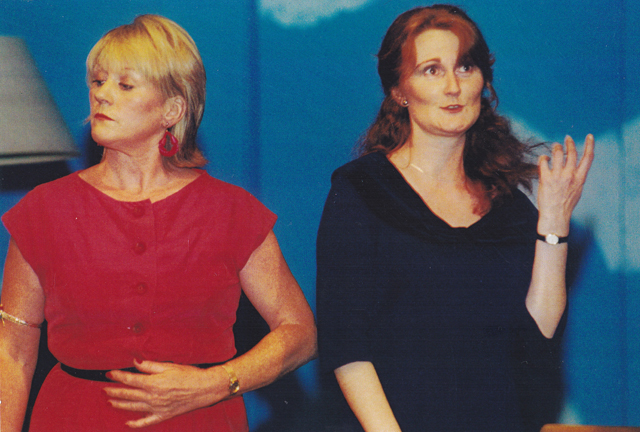
Cast List
Fred : Ralph Ward
Madge : Chrissie Gorman
Queenie : Kay Perversi
Webber : Tom Rainbird
Sykes : Mark Borowski
Small Part Player : Laurence Rampling
Gladys : Vanessa Westing
Old Man : Denis Turner
Petrie : Harriet Watson
Oldbourne : Helen McCormack
Production Team
Director : John McSpadyen
Set Design : John McSpadyen and Keith Syrett
Lighting Design : Andy Peregrine
Costume Design : Noreen Spall
Sound Design : Simon Humphries
Stage Manager : Tom Winter
ASMs : Jayne Lawrence, Elizabeth Johansson, Jason Kempster, Poggy
Lighting operators : Fiona Morrison, Celia Reynolds, Alison Foulds
Sound operator : Mick Smith
Rigging : Stephen Ley, John Feather
Set construction : Dominic Turner, Tess Walsh, John Feather, Jude Chalk & members of the cast and crew
In-house review
A common error
of those reviewing plays is to spend half the review summarising
the plot. With Fred and Madge, Joe Orton's "lost" play, this is
not something I could even attempt to do. Or, in a nutshell, Madge
left Fred (or was it the other way around?); Madge planned to marry
Jimmy (or was it Webber?); everybody ended up in India.
John McSpadyen
certainly had his work cut out in attempting to put this on stage
and to his credit he produced a play which never ceased to amuse."
"It is still a mystery why this play is so little known. No critical
reviews of the work of Orton which I have read make even a passing
reference to it. Written in 1959, it long pre-dates the three famous
full-length plays for which which Orton is best known." "It would
serve no purpose here to consider the play itself although, to be
honest, I found it shapeless and just a bit too long. Had it been
properly edited for professional performance I don't doubt that
it would have been sustantially re-worked.
In
fact, on a practical point, I think the director made a mistake
in keeping two intervals; it would have worked better with just
one.
Performances
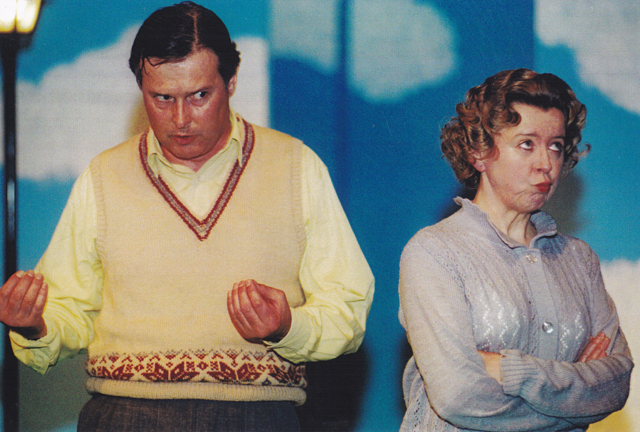
were overall of a high standard. Ralph Ward, in particular, as the
eponymous Fred, hit just the right note of utter confusion, while
retaining an impeccable inner logic. As an audience, we needed his
"common man" presence to anchor us into some form of reality. Otherwise
the play risked flying off into the stratosphere.
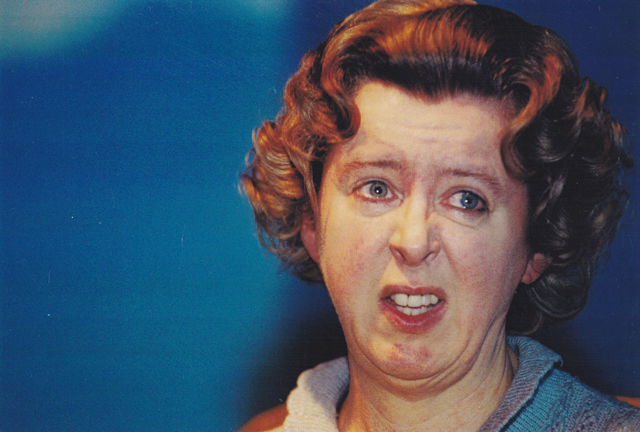
As Madge, his
wife (for at least part of the play), Chrissie Gorman gave us a
delightful gamut of facial expressions, although I felt that her
diction sometimes let her down. This was not a play where you could
"catch up" as an audience. Every line had to be perfectly pointed
of else the humour was totally lost and the action had moved on.
Unfortunately
a number of the cast shared this fault, and I felt at times that
they had not wholly grasped the playing style necessary for a play
such as this. I thought that Tom Rainbird as Webber (or Jimmy) seemed
particularly ill-at-ease, and even at times rather embarrassed at
being involved in the play - I'm sure he'd have felt more comfortable
with a good old-fashioned characterisation.
There were nevertheless
many comic gems which I shall remember for months to come. I adored
Vanessa Westing's voice and mannerisms as both the Gladyses; Helen
McCormack was a delight as Oldbourne the professional insulter;
and Denis Turner was unforgettable as the Old Man/Madge's father/Wilkins
the butler. The audience collapsed with laughter at the very sight
of him.
As Madge's sister
Queenie, Kay Perversi had a substantial and yet under-developed
rôle. She had to be Madge's foil but her character was not in itself
particularly funny. To her credit, she was always a pleasure to
watch and kept our attention, despite, on the night that I saw the
play, some chronic coughers in the first three rows.
Harriet Watson,
too, coped well with her difficult part as the ridiculously butch
Dr (or was it Professor?) Petrie. Unfortunately I felt that all
the humour was in the rather gross characterisation, and I didn't
find it very funny.
Mark Borowski
surprised us all by suddenly emerging from row D halfway through
the first act. A nice little coup de théâtre, but then regrettably
Orton seemed to have run out of ideas about what to do with him.
He got very drunk, sobered up and joined in the action on stage.
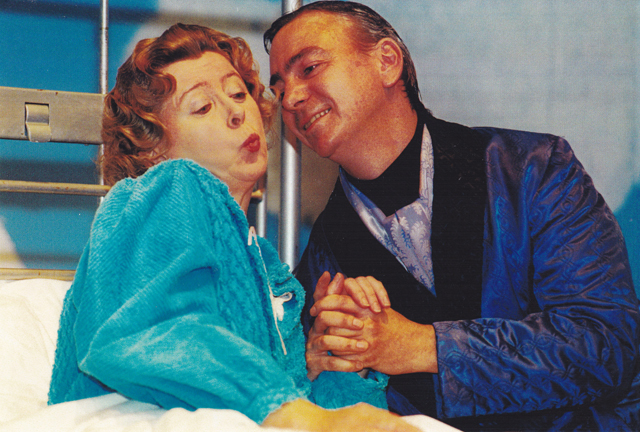
Laurence Rampling
had the audience in stitches when playing the nurse, in the scene
where Carry On Matron met Private Lives, but he rather lost me when
standing in the audience addressing the stage at a later point in
the play. But how thankless to be labelled in the programme as "Small
Part Player".
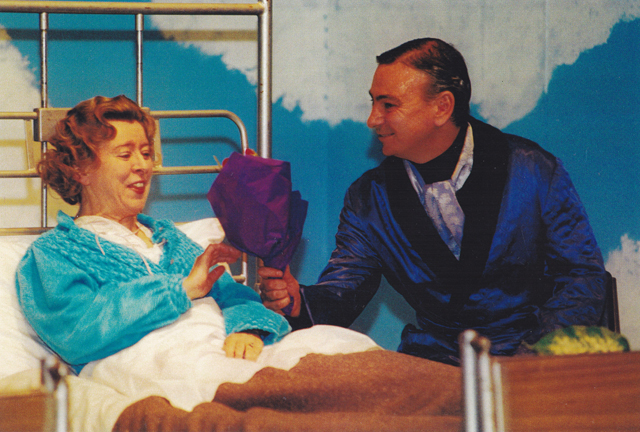
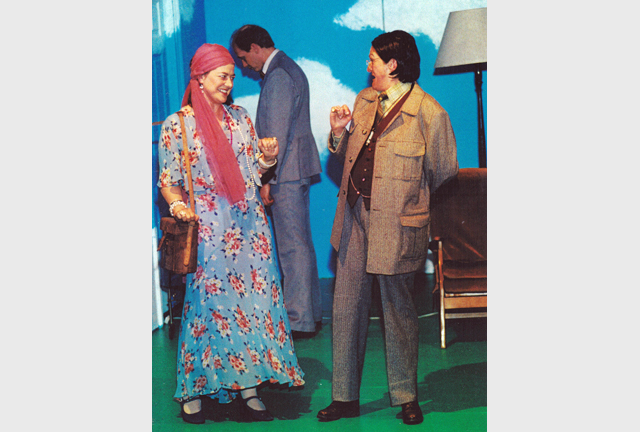
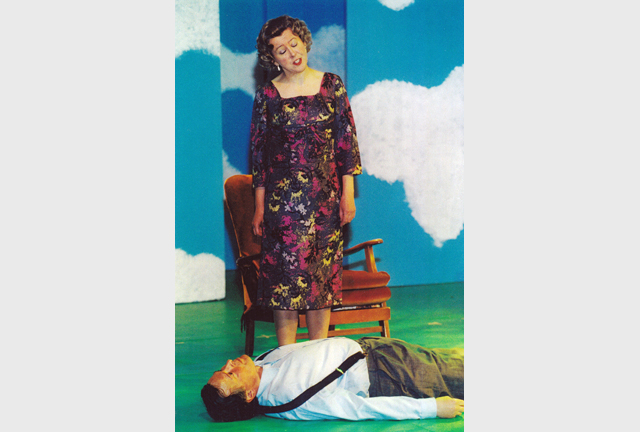
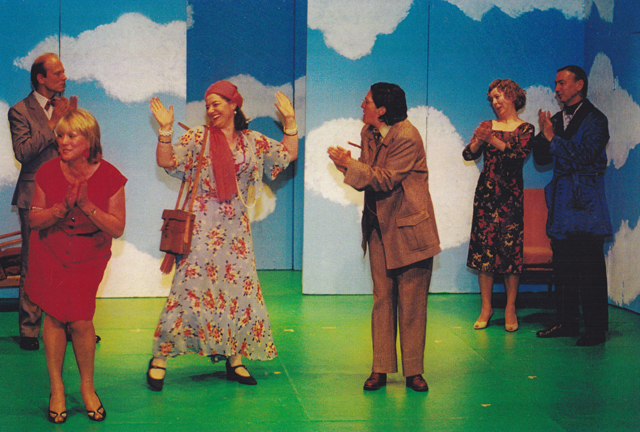
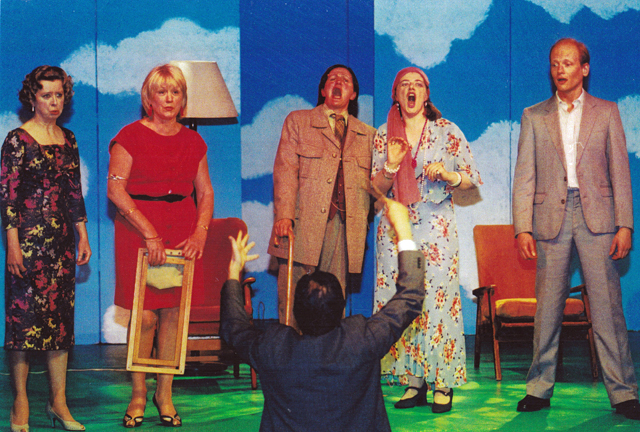
The set, designed
by the director and Keith Syrett, was a treat, the bold colours
and painted clouds echoing the surrealism of the play as a whole.
It was also very practical in terms of bringing on chairs, hospital
beds, lamp-posts, baths and everything else which needed to emerge
from backstage. I was impressed, too, by the sudden appearance of
a slope which was required for Fred to carry out his Sisyphean task
of stone-rolling.
The lighting
was appropriately bright and the costumes, by Noreen Spall, a feast
of gaudy colours and period detail. The final tableau, with the
entire cast dressed as for a Maharaja's court, was an utter delight."
"I must also mention the wonderful array of stage properties assembled
and, I understand, also made by Lucy Nandris. Who could ever forget
the long felt want, the narrow squeak, the tight squeeze and the
duck's arse?
When I was rehearsing
The Winter's Tale and we gathered in the Members' Bar to talk of
things Shakespearean, our conversation was frequently drowned out
by the cast of Fred and Madge in fits of uncontrolled laughter.
You felt in production that the cast were having a marvellous time
and their pleasure was infectious. It's not Orton's greatest play,
but thank you, John and cast, for a fun night out.
P.S. I don't
know if the audience realised it, but Mrs Gerald Legge, described
in the programme glossary as a 1950s society hostess, is, of course,
none other than Raine Spencer, stepmother of Diana, Princess of
Wales.
Fred and Madge
by Joe Orton |
|
|
June 16th - 23rd, 2001 |
The Tower Theatre Company performing at the Tower Theatre, Canonbury |
|
Cast List
|
Production Team |
In-house review
A common error
of those reviewing plays is to spend half the review summarising
the plot. With Fred and Madge, Joe Orton's "lost" play, this is
not something I could even attempt to do. Or, in a nutshell, Madge
left Fred (or was it the other way around?); Madge planned to marry
Jimmy (or was it Webber?); everybody ended up in India.
John McSpadyen
certainly had his work cut out in attempting to put this on stage
and to his credit he produced a play which never ceased to amuse."
"It is still a mystery why this play is so little known. No critical
reviews of the work of Orton which I have read make even a passing
reference to it. Written in 1959, it long pre-dates the three famous
full-length plays for which which Orton is best known." "It would
serve no purpose here to consider the play itself although, to be
honest, I found it shapeless and just a bit too long. Had it been
properly edited for professional performance I don't doubt that
it would have been sustantially re-worked.
In
fact, on a practical point, I think the director made a mistake
in keeping two intervals; it would have worked better with just
one.
Performances
were overall of a high standard. Ralph Ward, in particular, as the
eponymous Fred, hit just the right note of utter confusion, while
retaining an impeccable inner logic. As an audience, we needed his
"common man" presence to anchor us into some form of reality. Otherwise
the play risked flying off into the stratosphere.
As Madge, his
wife (for at least part of the play), Chrissie Gorman gave us a
delightful gamut of facial expressions, although I felt that her
diction sometimes let her down. This was not a play where you could
"catch up" as an audience. Every line had to be perfectly pointed
of else the humour was totally lost and the action had moved on.
Unfortunately
a number of the cast shared this fault, and I felt at times that
they had not wholly grasped the playing style necessary for a play
such as this. I thought that Tom Rainbird as Webber (or Jimmy) seemed
particularly ill-at-ease, and even at times rather embarrassed at
being involved in the play - I'm sure he'd have felt more comfortable
with a good old-fashioned characterisation.
There were nevertheless
many comic gems which I shall remember for months to come. I adored
Vanessa Westing's voice and mannerisms as both the Gladyses; Helen
McCormack was a delight as Oldbourne the professional insulter;
and Denis Turner was unforgettable as the Old Man/Madge's father/Wilkins
the butler. The audience collapsed with laughter at the very sight
of him.
As Madge's sister
Queenie, Kay Perversi had a substantial and yet under-developed
rôle. She had to be Madge's foil but her character was not in itself
particularly funny. To her credit, she was always a pleasure to
watch and kept our attention, despite, on the night that I saw the
play, some chronic coughers in the first three rows.
Harriet Watson,
too, coped well with her difficult part as the ridiculously butch
Dr (or was it Professor?) Petrie. Unfortunately I felt that all
the humour was in the rather gross characterisation, and I didn't
find it very funny.
Mark Borowski
surprised us all by suddenly emerging from row D halfway through
the first act. A nice little coup de théâtre, but then regrettably
Orton seemed to have run out of ideas about what to do with him.
He got very drunk, sobered up and joined in the action on stage.
Laurence Rampling
had the audience in stitches when playing the nurse, in the scene
where Carry On Matron met Private Lives, but he rather lost me when
standing in the audience addressing the stage at a later point in
the play. But how thankless to be labelled in the programme as "Small
Part Player".
The set, designed
by the director and Keith Syrett, was a treat, the bold colours
and painted clouds echoing the surrealism of the play as a whole.
It was also very practical in terms of bringing on chairs, hospital
beds, lamp-posts, baths and everything else which needed to emerge
from backstage. I was impressed, too, by the sudden appearance of
a slope which was required for Fred to carry out his Sisyphean task
of stone-rolling.
The lighting
was appropriately bright and the costumes, by Noreen Spall, a feast
of gaudy colours and period detail. The final tableau, with the
entire cast dressed as for a Maharaja's court, was an utter delight."
"I must also mention the wonderful array of stage properties assembled
and, I understand, also made by Lucy Nandris. Who could ever forget
the long felt want, the narrow squeak, the tight squeeze and the
duck's arse?
When I was rehearsing
The Winter's Tale and we gathered in the Members' Bar to talk of
things Shakespearean, our conversation was frequently drowned out
by the cast of Fred and Madge in fits of uncontrolled laughter.
You felt in production that the cast were having a marvellous time
and their pleasure was infectious. It's not Orton's greatest play,
but thank you, John and cast, for a fun night out.
P.S. I don't
know if the audience realised it, but Mrs Gerald Legge, described
in the programme glossary as a 1950s society hostess, is, of course,
none other than Raine Spencer, stepmother of Diana, Princess of
Wales.