


The Winter's Tale
by William Shakespeare
Directed by John Edmunds
May 19th - 26th, 2001
The Tower Theatre Company performing at the Tower Theatre, Canonbury






Cast List
Sicilia
Time, who conjures up the Tale : Anthony Green
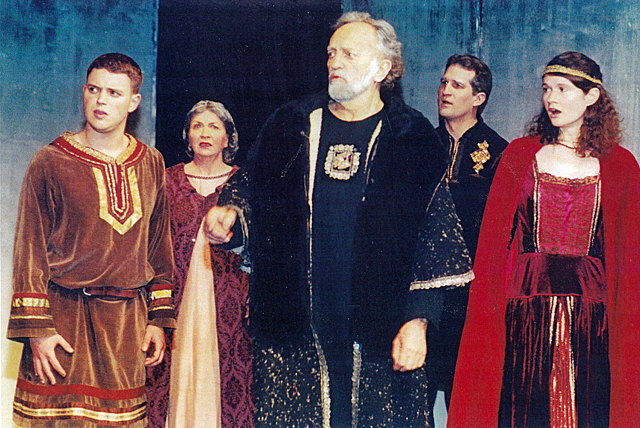
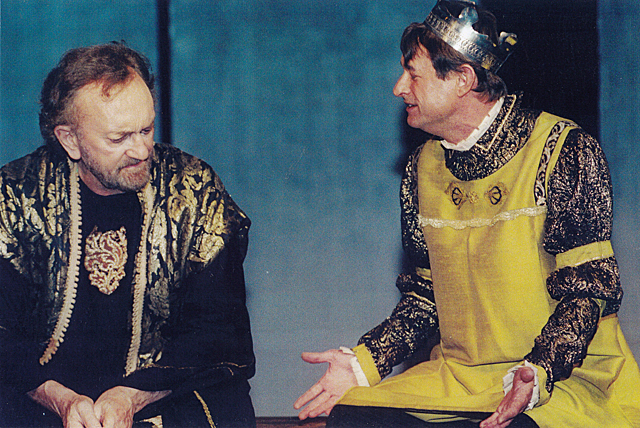
Leontes, King of Sicilia : John Morton
Hermione, his Queen : Emmeline Winterbotham
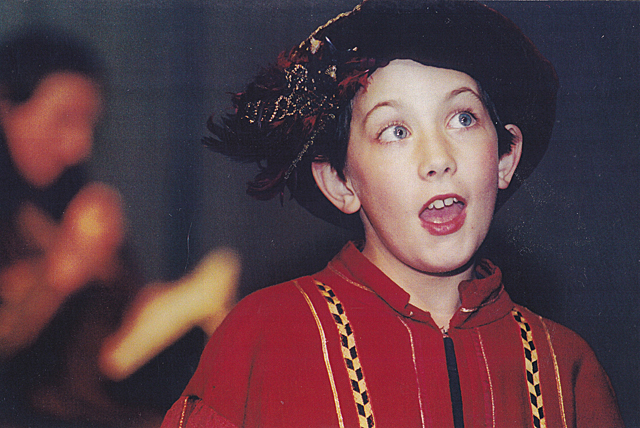
Mamillius, his son and heir : Frederick Winterbotham or Héloïse Winterbotham
Polixenes, King of Bohemia : Richard Pedersen
Archidamus, a Lord of Bohemia : Brice Pitt
Lords of Sicilia
Camillo : Alexander Gordon Wood
Antigonus : Terry Mathews
Cleomenes : Alison Liney
Dion : Rebekah Higgitt
Lord : Anthony Green
Paulina, wife to Antigonus : Jeanette Clarke
Ladies in Waiting
Emilia : Alison Liney
Lady : Rebekah Higgitt
Attendant : John Stivey
Gaoler : Peter Novis
Bohemia
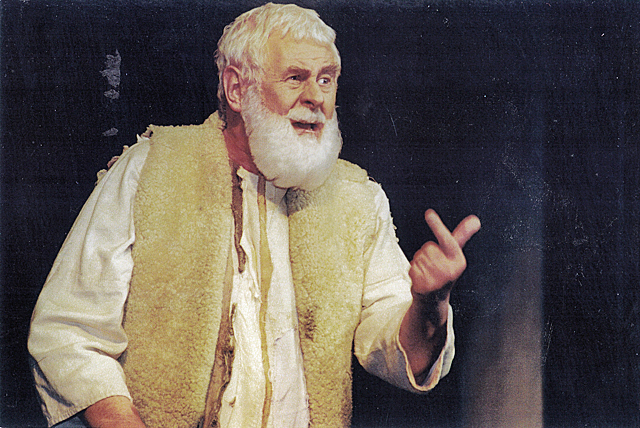
Shepherd : Brice Pitt
His son, a bumpkin : John Stivey
Perdita, his adopted daughter : Suzanne Marie Taylor
Florizel, son and heir to Polixenes : Daniel Honeywell
Autolycus, a rogue : Peter Novis
Mopsa : Rebekah Higgitt
Dorcas : Alison Liney
Mariner : Peter Novis
Bear : Anthony Green
Production Team
Director : John Edmunds
Set Design : Rebecca Vincent
Lighting Design : Laurence Tuerk
Costume Design : Nigel Martin
Stage Manager : Dinah Irvine
ASMs : Jean Carr, Judy Drayton, Rachel Hindley, Eileen Mullen
Lighting operator : Lorna Dodd
Sound operator : Becky Bartlett
Sound tape : Simon Humphries
Wardrobe : Celia Reynolds, Jill Batty, Kay Perversi, Barbara Mathews, Mary Benning
Set construction : Keith Syrett, John Feather, Claire McLaughlin, John Sole & members of the cast and crew
In-house review
John Edmunds
has returned to the Tower, having many years ago awakened us to
classical French drama, to give us a carefully considered and disciplined
production of The Winter's Tale, which was subsequently presented
at the Jardin Shakespeare in Paris.
The long text
was cut to two hours which, despite some grieving among the judicious,
was most likely sufficient caviare for a general Parisian audience
grappling with plot and language in the open air.
Scenes were
linked by lush 19th century orchestral music which, working with
the accelerated plot, evoked a Verdi-like treatment of the passions
of the main characters and hinted further that we can now only view
them through the psychological insights of a later era.
The personal
conflicts explored by the neo-Platonism of the 17th century through
myth, romance and legend we also view as disclosures of the consulting
room requiring scientific analysis. It was an interesting approach
to emphasise the character and motives of the principal participants
and to let pass some of the theatrical delights of telling the tale,
in order to ease the crossing of the divide between the Renaissance
and us, and it succeeded in leading the audience to focus on and
identify with the main themes of the play.
The play was
well directed and the principal parts were well played. Emmeline
Winterbotham as Hermione combined unquestionable integrity, that
easily convinced us of her innocence, with a charm and spirit that
might arouse jealousy. In the equivocal rôle of Polixenes, Richard
Pedersen certainly spoke the part with clarity and power, but straightforward
speaking of the part, although not in conflict with the text, does
little to inflame Leontes' jealousy.
I suggest the
actor needed to portray overt sexual attraction and some of the
cold determination he later reveals in dealing with his son, to
push the less assured Leontes into finding, perhaps without fully
realising it himself, that after a long visit he does not like or
trust his old friend.
However the
jealousy of Leontes is aroused, which must be a speculative but
essential part of a modern production, John Morton's playing of
the rôle as a refined introspective turning to destructive amoral
frenzy when he thinks that he has lost all he holds most dear and
reverting to exaggerated contrition, was internally consistent and
provided a convincing basis for the ensuing action. It was also
a pleasure to follow his mastery of some of Shakespeare's most complex
imagery and syntax.
Jeanette Clarke
was a splendid, triumphant Paulina, fervent and candid, and her
Camillo of Alexander Gordon Wood was just the sort of quiet, decent
fellow that might make her a discreet and supportive consort.
Though individual
parts were well played, the rustics and Autolycus needed more ensemble
direction to transform the spirit of the piece from winter psychosis
to midsummer madness. Suzanne Marie Taylor lifted the spirits with
her easy silvery voice and light innocence.
In a romance
her lover should be taller than her, but despite this disadvantage,
Daniel Honeywell proved himself a boldly committed suitor. Peter
Novis's Autolycus was much cut, but the essential venal roguery
was there. Brice Pitt as the shepherd and John Stivey as his son
anchored the Bohemian scenes in merriment and it is always nice
to see Alison Liney in any part or gender.
The Winter's Tale
by William Shakespeare |
|
|
May 19th - 26th, 2001 |
The Tower Theatre Company performing at the Tower Theatre, Canonbury |
|
Cast List
Lords of Sicilia Paulina, wife to Antigonus : Jeanette Clarke Ladies in Waiting
Attendant : John Stivey Bohemia |
Production Team
Director : John Edmunds
Set Design : Rebecca Vincent
Lighting Design : Laurence Tuerk
Costume Design : Nigel Martin
|
In-house review
John Edmunds
has returned to the Tower, having many years ago awakened us to
classical French drama, to give us a carefully considered and disciplined
production of The Winter's Tale, which was subsequently presented
at the Jardin Shakespeare in Paris.
The long text
was cut to two hours which, despite some grieving among the judicious,
was most likely sufficient caviare for a general Parisian audience
grappling with plot and language in the open air.
Scenes were
linked by lush 19th century orchestral music which, working with
the accelerated plot, evoked a Verdi-like treatment of the passions
of the main characters and hinted further that we can now only view
them through the psychological insights of a later era.
The personal
conflicts explored by the neo-Platonism of the 17th century through
myth, romance and legend we also view as disclosures of the consulting
room requiring scientific analysis. It was an interesting approach
to emphasise the character and motives of the principal participants
and to let pass some of the theatrical delights of telling the tale,
in order to ease the crossing of the divide between the Renaissance
and us, and it succeeded in leading the audience to focus on and
identify with the main themes of the play.
The play was
well directed and the principal parts were well played. Emmeline
Winterbotham as Hermione combined unquestionable integrity, that
easily convinced us of her innocence, with a charm and spirit that
might arouse jealousy. In the equivocal rôle of Polixenes, Richard
Pedersen certainly spoke the part with clarity and power, but straightforward
speaking of the part, although not in conflict with the text, does
little to inflame Leontes' jealousy.
I suggest the
actor needed to portray overt sexual attraction and some of the
cold determination he later reveals in dealing with his son, to
push the less assured Leontes into finding, perhaps without fully
realising it himself, that after a long visit he does not like or
trust his old friend.
However the
jealousy of Leontes is aroused, which must be a speculative but
essential part of a modern production, John Morton's playing of
the rôle as a refined introspective turning to destructive amoral
frenzy when he thinks that he has lost all he holds most dear and
reverting to exaggerated contrition, was internally consistent and
provided a convincing basis for the ensuing action. It was also
a pleasure to follow his mastery of some of Shakespeare's most complex
imagery and syntax.
Jeanette Clarke
was a splendid, triumphant Paulina, fervent and candid, and her
Camillo of Alexander Gordon Wood was just the sort of quiet, decent
fellow that might make her a discreet and supportive consort.
Though individual
parts were well played, the rustics and Autolycus needed more ensemble
direction to transform the spirit of the piece from winter psychosis
to midsummer madness. Suzanne Marie Taylor lifted the spirits with
her easy silvery voice and light innocence.
In a romance
her lover should be taller than her, but despite this disadvantage,
Daniel Honeywell proved himself a boldly committed suitor. Peter
Novis's Autolycus was much cut, but the essential venal roguery
was there. Brice Pitt as the shepherd and John Stivey as his son
anchored the Bohemian scenes in merriment and it is always nice
to see Alison Liney in any part or gender.