I recently had the pleasure of seeing Spring Forward at the Tower Theatre. A production that consisted of three short plays depicting the lives and relationships of different individuals. I would say that all three were enjoyable, fun to watch and an easy viewing. Each had a mixture of humour and drama, drawing the audience in with some laughs, before hooking them with a deeper view of the hardships each character faced. I would comment that not all three plays managed to find the right balance between the two themes. Particularly in the beginning, some of the jokes felt like they relied on cheap gags and cliché sitcom-like jokes. I recently had the pleasure of seeing Spring Forward at the Tower Theatre. A production that consisted of three short plays depicting the lives and relationships of different individuals. I would say that all three were enjoyable, fun to watch and an easy viewing. Each had a mixture of humour and drama, drawing the audience in with some laughs, before hooking them with a deeper view of the hardships each character faced. I would comment that not all three plays managed to find the right balance between the two themes. Particularly in the beginning, some of the jokes felt like they relied on cheap gags and cliché sitcom-like jokes.
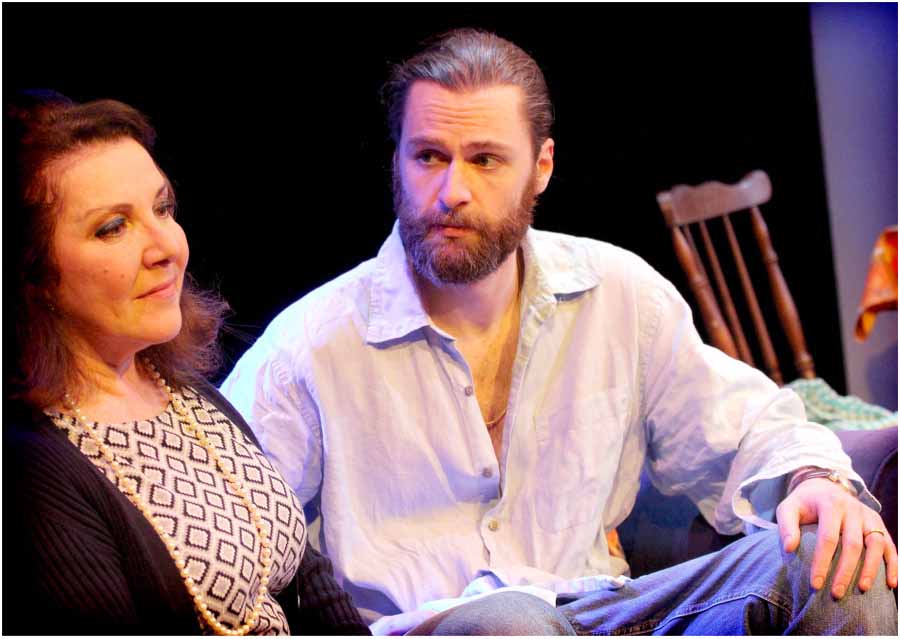
 The first play, Bertha and Hal, explored the strained relationship between a mother and her son. The play begins with Bertha (Katerine Holt) being let down when her son comes to visit without her grandson, who she was so desperately waiting to see. Hal (Sam Alan) makes a half-hearted excuse as to why he couldn’t bring his son to see her; the implication very much that Hal’s wife doesn’t want her anywhere near the baby. This leads to old wounds being re-opened, emotional breakdowns and a fragile reconciliation at the end. The first play, Bertha and Hal, explored the strained relationship between a mother and her son. The play begins with Bertha (Katerine Holt) being let down when her son comes to visit without her grandson, who she was so desperately waiting to see. Hal (Sam Alan) makes a half-hearted excuse as to why he couldn’t bring his son to see her; the implication very much that Hal’s wife doesn’t want her anywhere near the baby. This leads to old wounds being re-opened, emotional breakdowns and a fragile reconciliation at the end.
Some of the acting in this piece felt rather forced, with the tense atmosphere and argument being overplayed which meant that the reconciliation at the end felt flat and unreal – not a natural progression from what had gone before. I did come to enjoy the character of Bertha, and her monologue about being a mother came across as natural and touching and ultimately I grew to like the characters
 Then came Telling It, which I liked very much, both in terms of storytelling and acting. A classic tale of she said, he said, with a tragic twist. The story is told from the perspective of Alison, a prostitute who has just been assaulted while on the job, and Neil the customer who apparently went crazy and attacked her. Then came Telling It, which I liked very much, both in terms of storytelling and acting. A classic tale of she said, he said, with a tragic twist. The story is told from the perspective of Alison, a prostitute who has just been assaulted while on the job, and Neil the customer who apparently went crazy and attacked her.
The play begins with Alison (or Chantelle as she’s sometimes known, played by Lucy Moss) being interviewed by DI Lesley Mander (Nina Sprigge) and DS Gary Burwood (Henry McMenamin) after the assault has taken place. Initially this play seemed to have some television clichés and cheap jokes. DS Burwood is an old fogey who immediately condemns Alison for being a prostitute, while DI Mander is more sympathetic and wants to get the whole story. Basically a good cop, bad cop dynamic. Alison appears confrontational, defensive and tough - and sporting a fat lip. However, as Alison details the story of what led to her being on the streets, we begin to see her actions in perspective and she is very much seen as the undisputed victim, even Burwood appears more sympathetic, and they go to confront the person who assaulted Alison.
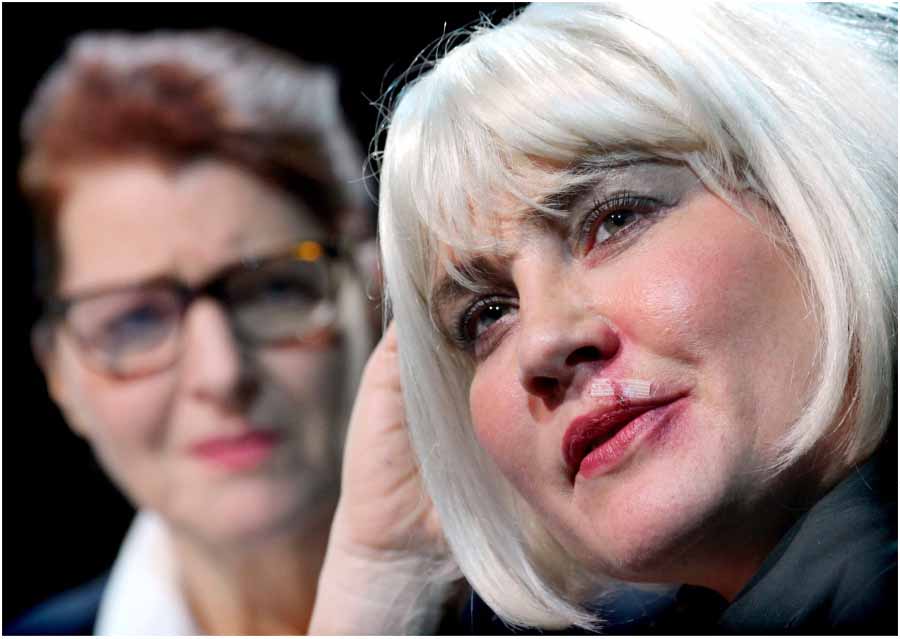 The acting was phenomenal, and despite the typical dynamic I loved the way Burwood and Mander played off one another during the interview scene, with Burwood eventually coming around, even enjoying the part where he stuffed the condoms in his pockets as they left. Alison’s ability to slowly let the mask slip in the scene, as she goes from defensive to vulnerable was what indicated to me that this play was going to be satisfying. The acting was phenomenal, and despite the typical dynamic I loved the way Burwood and Mander played off one another during the interview scene, with Burwood eventually coming around, even enjoying the part where he stuffed the condoms in his pockets as they left. Alison’s ability to slowly let the mask slip in the scene, as she goes from defensive to vulnerable was what indicated to me that this play was going to be satisfying.
We then get to meet Neil (Richard Kirby) the man who assaulted Alison after he brought her back to the flat. I loved how Neil was portrayed, because you get so much of his character in such a short time and learn that he has a history of being misunderstood and victimised. I enjoyed the mirroring between Alison/Chantelle and Neil, because they are both victims of circumstance – and I liked the ambiguous ending.
 When I read the synopsis for Swipe, the final play, I was a little underwhelmed at the prospect of seeing a woman dissatisfied with her life, navigating the bleak world of dating apps. The three main characters are Elle (Thisakya Dias) Sarah (Ciara Gaughan) and Elle’s mind (Helen Wieland) supported by an ensemble of three male actors playing an assortment of disappointing dates (Mayank Adlakha, Cedric Dumornay and Jack Cavendish). We see that Elle goes on disastrous dates, has a job as a Feature Writer that she hates and has a flatmate she doesn’t like. Sarah has a boyfriend who she is gradually getting serious with, but she lives with her overbearing father. When I read the synopsis for Swipe, the final play, I was a little underwhelmed at the prospect of seeing a woman dissatisfied with her life, navigating the bleak world of dating apps. The three main characters are Elle (Thisakya Dias) Sarah (Ciara Gaughan) and Elle’s mind (Helen Wieland) supported by an ensemble of three male actors playing an assortment of disappointing dates (Mayank Adlakha, Cedric Dumornay and Jack Cavendish). We see that Elle goes on disastrous dates, has a job as a Feature Writer that she hates and has a flatmate she doesn’t like. Sarah has a boyfriend who she is gradually getting serious with, but she lives with her overbearing father.
 At first both friends seem to be portrayed as on an even footing. Unhappy with their current state of their lives. The difference being that we don’t get any personification of Sarah’s mind so we don’t see any of her inner conflicts. What we do see is Elle’s life gradually gets worse, as she makes one bad decision after another and loses her motivation, while Sarah gradually moves towards being a more functioning adult. Credit to both actors for making the relationship feel so natural, so the moments where Sarah seemed to be moving forward and as Elle was left behind were painful to watch. One of the best parts of the play was the personification of Elle’s mind, a fantastic character, who provided us with an insight to Elle’s internal conflicts throughout the action. Despite how uncomfortable it got at times, like Elle finding out she’d been recorded during a one-night stand, the play always managed to keep a sense of humour. All credit to the actors who portrayed the guys on dating apps – they were fantastic at playing really awful people. I did like that Elle had a hopeful moment at the end that didn’t come from meeting someone, instead from her deciding to ignore her tedious work assignments and write about something she is passionate about. At first both friends seem to be portrayed as on an even footing. Unhappy with their current state of their lives. The difference being that we don’t get any personification of Sarah’s mind so we don’t see any of her inner conflicts. What we do see is Elle’s life gradually gets worse, as she makes one bad decision after another and loses her motivation, while Sarah gradually moves towards being a more functioning adult. Credit to both actors for making the relationship feel so natural, so the moments where Sarah seemed to be moving forward and as Elle was left behind were painful to watch. One of the best parts of the play was the personification of Elle’s mind, a fantastic character, who provided us with an insight to Elle’s internal conflicts throughout the action. Despite how uncomfortable it got at times, like Elle finding out she’d been recorded during a one-night stand, the play always managed to keep a sense of humour. All credit to the actors who portrayed the guys on dating apps – they were fantastic at playing really awful people. I did like that Elle had a hopeful moment at the end that didn’t come from meeting someone, instead from her deciding to ignore her tedious work assignments and write about something she is passionate about.
Despite not enjoying every play to the same degree, I can’t say I was disappointed to have seen any of them. All three had brilliant endings, and despite some of the overused jokes and tropes from other fiction, they all had something unique in themselves to find enjoyable. As usual I loved this year’s Spring Forward and can’t wait to see what comes in 2025!
Photography by Robery Piwko
|